
New Breakthrough in Solar Cell Efficiency Hits 130% Quantum Yield
TL;DR AI
2 min readKey summary
An international team reported a 130% quantum yield by combining singlet fission in tetracene with molybdenum complexes.
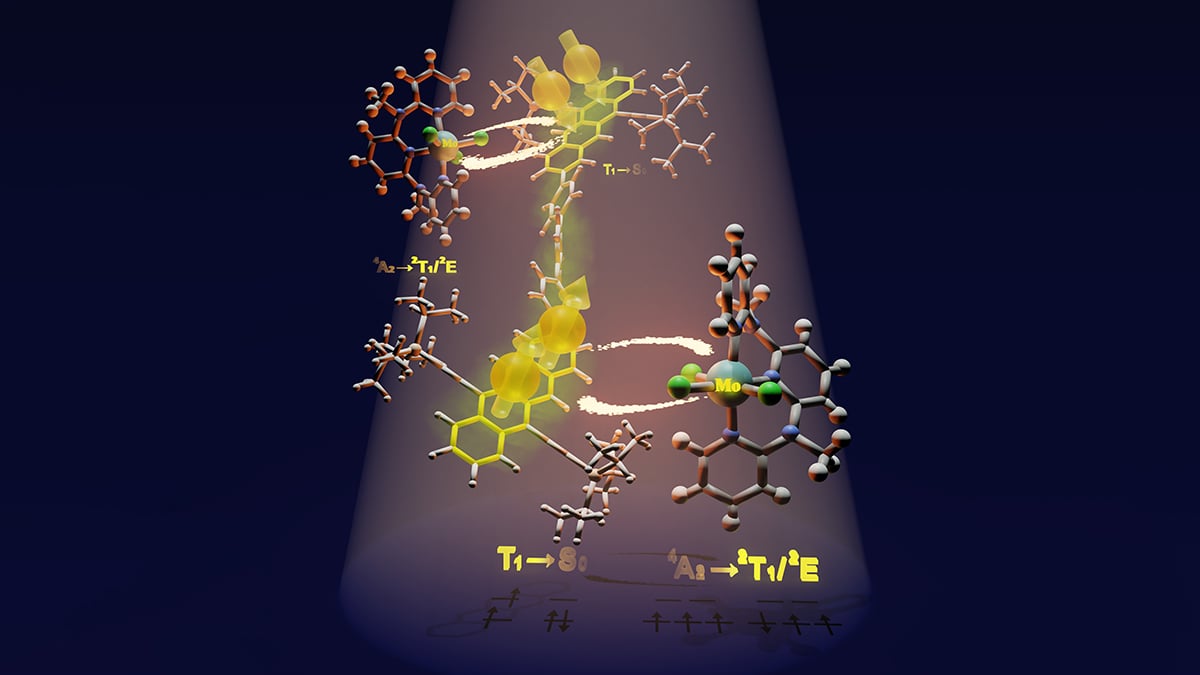
The method splits one absorbed photon’s energy into two excitons and uses molybdenum as a spin-flip emitter to capture and emit the multiplied excitons.
Experiments measured 1.3 molybdenum-based complexes excited per absorbed photon but were performed in liquid solution, requiring solid-state conversion for solar panels.
Researchers identified FRET as a competing loss pathway and said further work must address energy retention and device integration.