
Harvard Scientists Reveal Secret Structure Behind How You Smell
TL;DR AI
2 min readKey summary
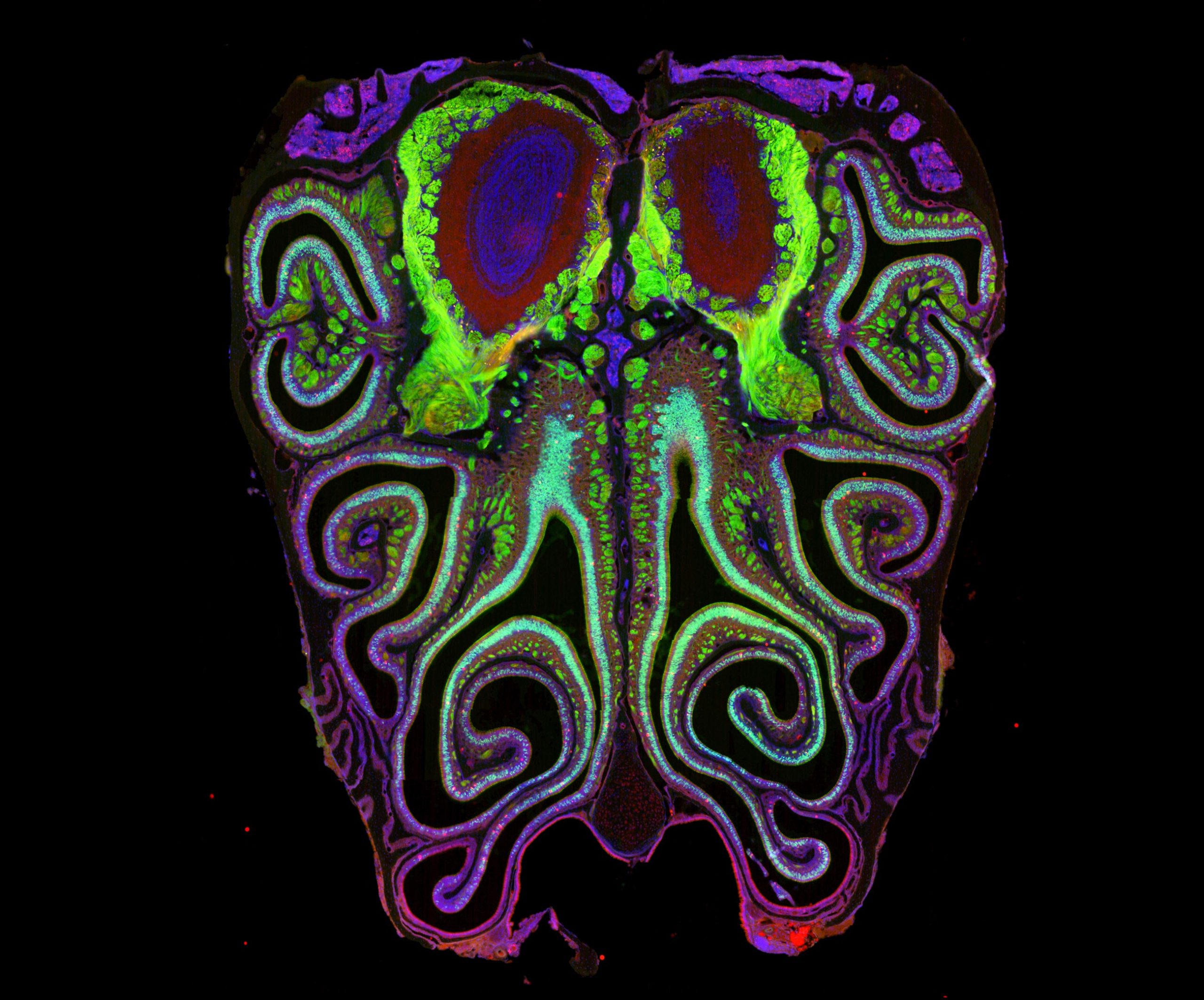
Harvard researchers found that mouse smell receptors are not randomly placed, but organized into more than 1,000 ordered horizontal stripes.
Using single-cell sequencing and spatial mapping of 5.5 million olfactory neurons, they linked this nasal layout to maps in the olfactory bulb.
The study, published in Cell, suggests retinoic acid helps drive the pattern and offers a new framework for how odors are encoded and relayed to the brain.