
3D-sensing technology could improve self-driving cars and robotic surgery
TL;DR AI
2 min readKey summary
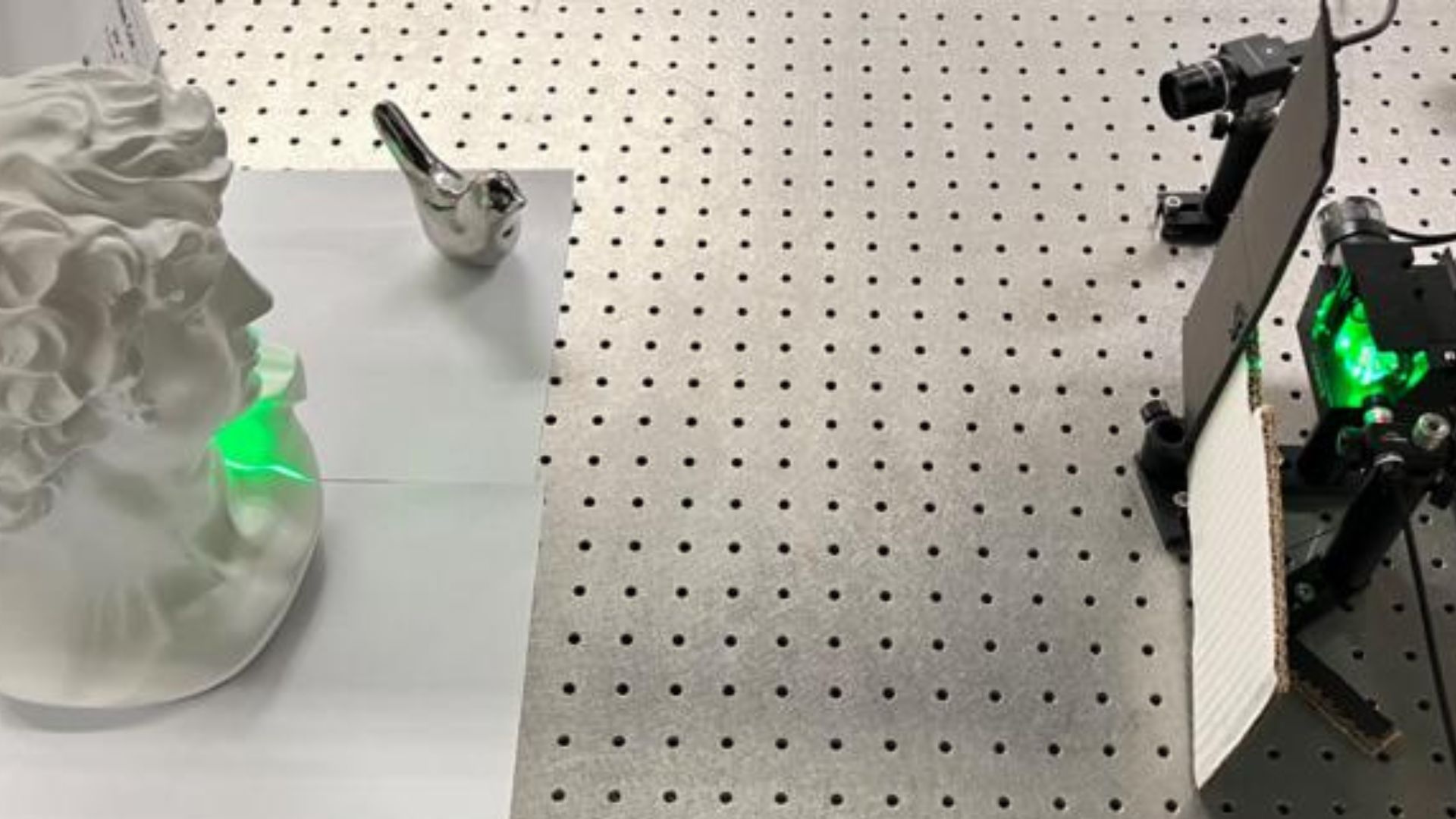
University of Arizona researchers developed a scalable 3D imaging method that uses room surfaces as a virtual screen plus an event camera.
The system captures fast, motion-robust detail from both glossy and matte objects without being misled by changing reflections.
This could make machine vision more reliable in challenging real-world scenes for autonomous navigation, robotic surgery, and industrial or biomedical imaging.
The work, published in Nature Communications, was led by Florian Willomitzer and Aniket Dashpute.