What's the best cabin layout for aircraft evacuation?
Key summary
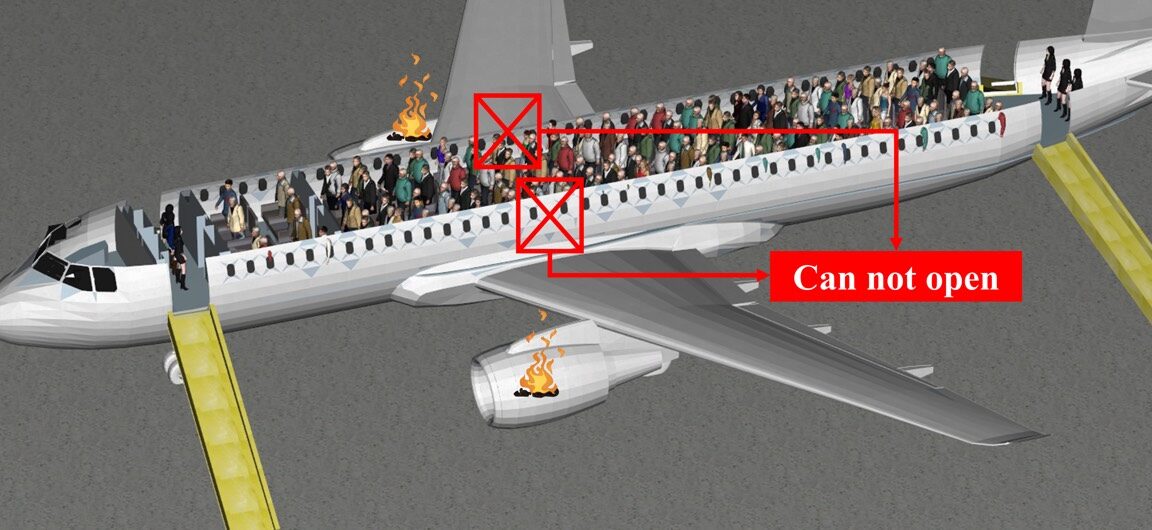
Co-author Chenyang (Luca) Zhang of the University of Calgary published a 2026 AIP Advances study examining dual-engine fire evacuations as a low-probability, high-impact event.
The models used two age categories (60+ and under 60), three passenger-ratio scenarios (youth-dominated, balanced, elderly-dominated), and three seating patterns (elderly near exits evenly; elderly concentrated in middle away from exits; elderly randomly distributed).
No tested condition met the FAA 90-second evacuation requirement.
Evacuation times ranged from 141 seconds (20% elderly, evenly distributed near exits) to 218.5 seconds (80% elderly, same near-exit distribution).
Limitations include variability among elderly passengers and omission of crew-assistance needs; authors recommend further simulations with empirical cabin data, testing behavioral interventions (e.g., tailored safety briefings), and considering cabin redesigns for elderly passengers (designated seating, wider aisles, better visibility, armrests).